
1. Allāh ta‘ālā has taken oath of ten nights in Sūrah Al-Fajr. According to the majority of the commentators of Qur’ān, the nights are those of the (first) ten days of Dhul-Hijjah.
2. Sayyidunā Abū Hurayrah radhiyallāhu ‘anhu related that Rasūlullāh sallallāhu ‘alayhi wasallam said, “On no days is the worship of Allāh desired more than in the (first) ten days of Dhul-Hijjah. The fast of each of these days is equal to the fast of a whole year, and the worship of each of these nights is equal to the worship of Laylatul-Qadr.” (At-Tirmidhi, Ibn Mājah)
3. The mother of the believers, Sayyidah Hafsah radhiyallāhu ‘anhā reports that Rasūlullāh sallallāhu ‘alayhi wasallam used to fast the (first) nine days of Dhul-Hijjah. (Abū Dāwūd, An-Nasā’ī, Ahmad)
4. Sayyidunā 'Abdullah Ibn ‘Umar radhiyallāhu ‘anhumā related that Rasūlullāh sallallāhu ‘alayhi wasallam said, “No days are as weighty with Allāh and so liked by Him for good deeds than the first ten days of Dhul-Hijjah. So on these days increasingly read Subhānallāh, Lā ilāha illallāh, Alhamdulillāh and Allāhu Akbar.” (Ahmad)
Virtues of the Day of 'Arafah (9th Dhul-Hijjah)
1. Sayyidah ‘Ā’ishah radhiyallāhu ‘anhā reports that Rasūlullāh sallallāhu ‘alayhi wasallam said, “ There is no day in which Allāh sets free more souls from the fire of hell than on the day of 'Arafāt. And on that day Allāh draws near to the earth and by way of exhibiting His Pride remarks to the angels, ‘What is the desire of these (servants of mine)?” (Muslim)
2. Sayyidunā Talhah radhiyallāhu ‘anhu reports that Rasūlullāh sallallāhu ‘alayhi wasallam said, “Apart from the day of the Battle of Badr there is no day on which the Shaytān is seen to be more humiliated, more rejected, more depressed and more infuriated, than on the day of 'Arafāt, and indeed all this is only because of beholding the abundance of descending mercy (on the day) and Allāh’s forgiveness of the great sins of the servants.” (Mishkāt)
3. Sayyidunā Abū Qatādah Al-Ansārī radhiyallāhu ‘anhu narrated that Rasūlullāh sallallāhu ‘alayhi wasallam was asked about the fast on the day of 'Arafāt. He said, “It compensates for the (minor) sins of the past and the coming year.” (Muslim, At-Tirmidhī, Ibn Mājah)
Night of ‘Īd-ul-Adhā
The nights of both ‘Īds are described in the Hadīth as amongst the great and sacred nights in the Muslim calendar. To remain awake on the nights of ‘Īd and perform ‘ibādah is a source of great virtue and reward.
1. Sayyidunā Abū ‘Umārah radhiyallāhu ‘anhu related that ‘Ā’ishah radhiyallāhu ‘anhā reports that Rasūlullāh sallallāhu ‘alayhi wasallam said, “Whosoever stays awake and performs ‘ibādah (worship) on the nights of the two ‘Īds, with hope for abundant reward (from Allāh ta‘ālā), his heart will not die on the day (i.e. Qiyāmah) when all hearts will be dead.” (At-Targhīb)
2. Sayyidunā Mu‘ādh Ibn Jabal radhiyallāhu ‘anhumā relates that Rasūlullāh sallallāhu ‘alayhi wasallam said, “Jannat is wājib (incumbent) for those who stay awake with the intention of making ‘ibādah on the following nights: 8th, 9th and 10th of Dhul-Hijjah, the night of ‘Īd-ul-Fitr and the night of the 15th of Sha‘bān.” (At-Targhīb)
Virtues of Udhiyah (Qurbānī)
Rasūlullāh sallallāhu ‘alayhi wasallam said, “There is nothing dearer to Allāh during the days of Udhiyah than the sacrificing of animals. The sacrificed animal shall come on the Day of Judgement with its horns, hair, and hooves (to be weighed). The sacrifice is accepted by Allāh before the blood reaches the ground. Therefore sacrifice with an open and happy heart.” (At-Tirmidhī, Ibn Mājah)
Takbirāt of Tashrīq
The Takbirāt of Tashrīq are:
Allāhu Akbar, Allāhu Akbar, Lā ilāha illallāhu wallāhu Akbar, Allāhu Akbar, Walil lāhil hamd.
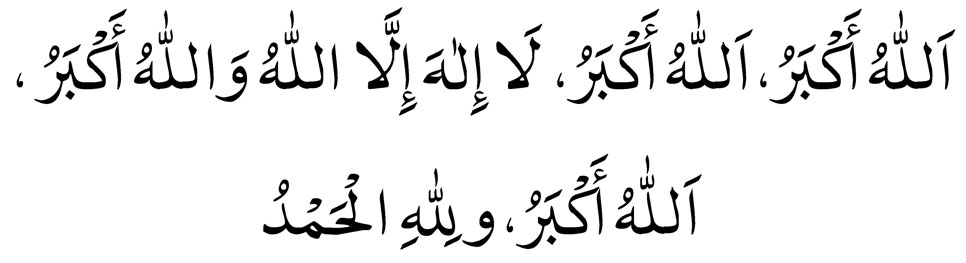
“Allāh is the Greatest, Allāh is the Greatest. There is no deity besides Allāh and Allāh is the Greatest. Allāh is the Greatest and all praises are for Allāh only.”
It is wājib for every adult Muslim to recite these Takbirāt of Tashrīq audibly once after every fard salāh from the Fajr of 9th Dhul-Hijjah to the ‘Asr of 13th Dhul-Hijjah (i.e. total of 23 salāh).
• Mas’alah: Women should not say it loudly but softly.
• Mas’alah: Takbīr should be recited immediately after concluding the fard prayer.


